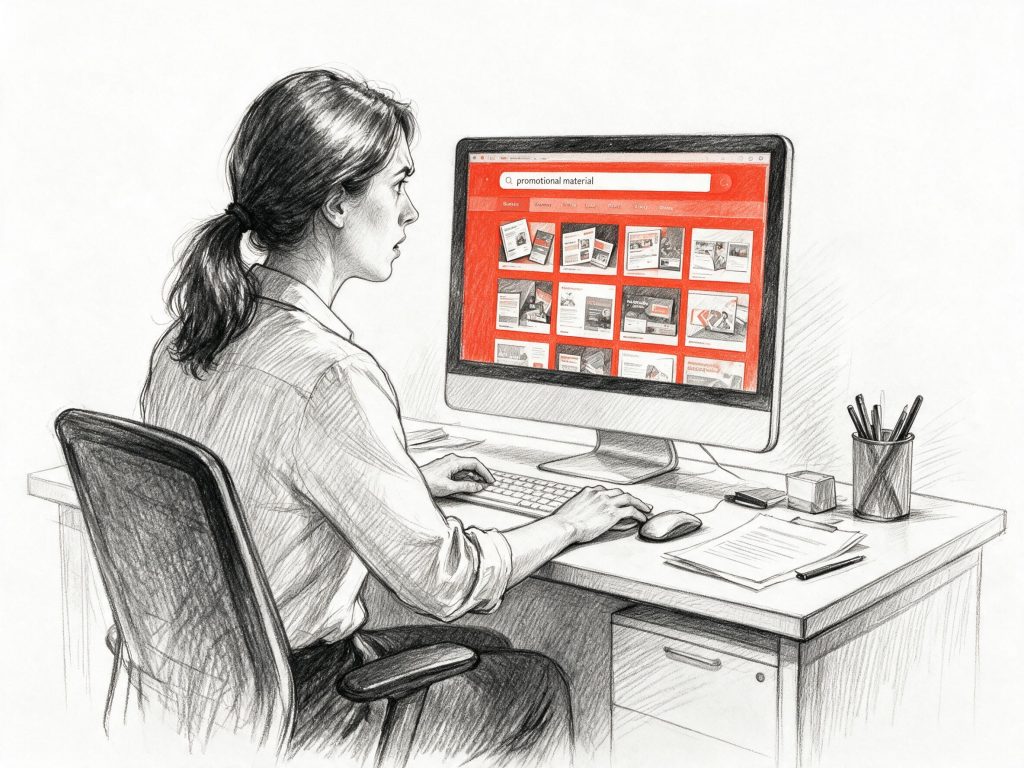
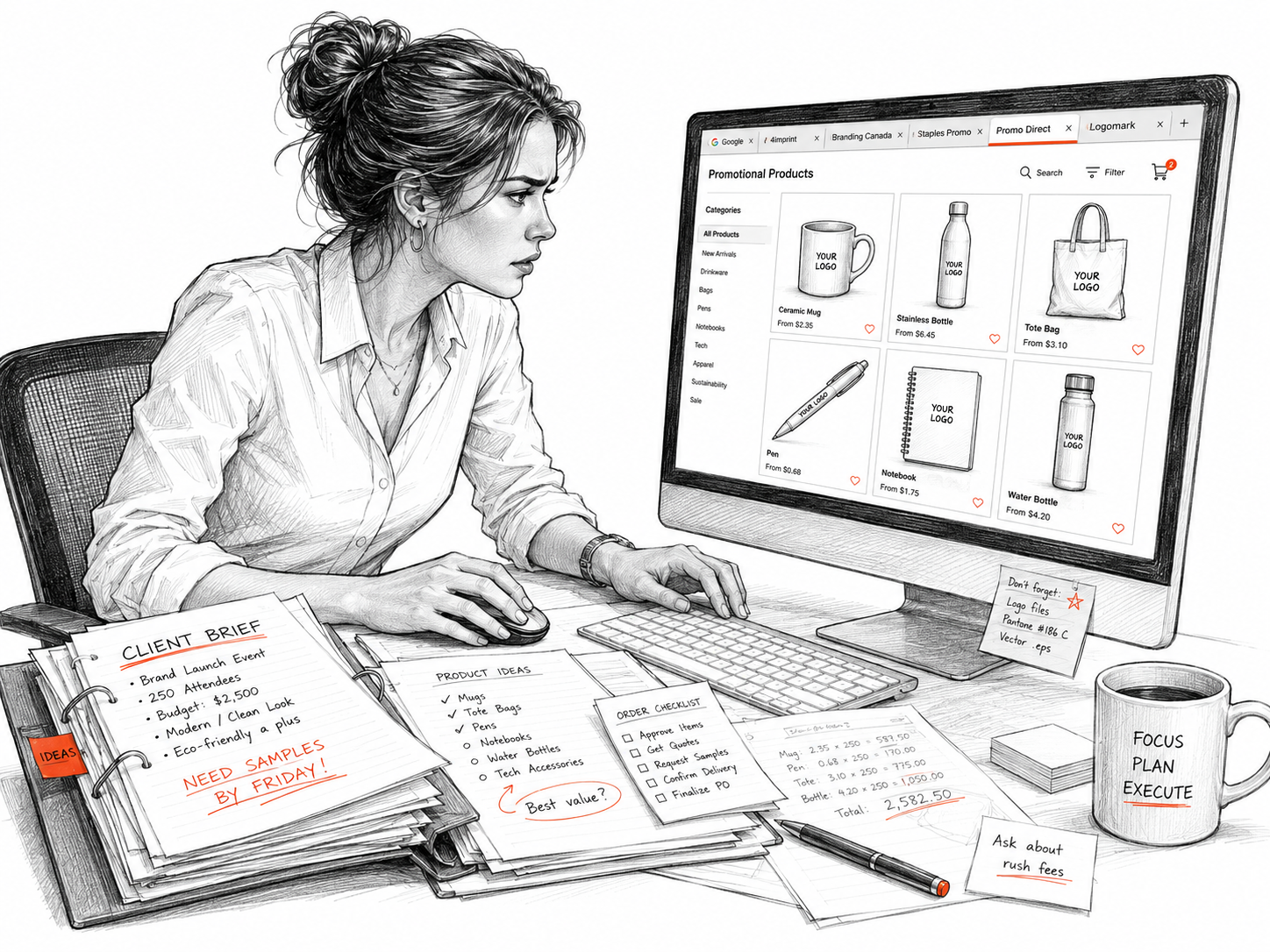
Finding distinctive, well-received merchandise does not require a dedicated sourcing team or a big budget, but it does require a smarter process than scrolling a catalogue.
Most people responsible for buying promotional merchandise are not merchandise specialists. They are marketers, office managers, HR leads or founders who have been handed a task alongside a dozen others, a limited budget, and an expectation that whatever they choose will not feel like everyone else’s giveaway.
The instinct in this position is to search a generic catalogue site, filter by price, and pick whatever looks reasonable within the first page of results. The problem is that everyone else under the same time pressure does exactly the same thing, which is why so much promotional merchandise looks and feels identical: the same mugs, the same tote bags, the same USB sticks that quietly went out of fashion years ago.
Finding something distinctive on limited time does not require becoming a sourcing expert. It requires a slightly different process. Start with the recipient, not the product. Who is receiving this, and what do they already value, use or aspire to? A small, specific insight (a team that cycles to work, a client industry with a particular seasonal rhythm, an audience that cares visibly about sustainability) narrows a search far faster than browsing by category.
Next, resist the temptation to search only for “promotional” versions of a product. Some of the best-received branded items began life as a well-made, ordinary product from a smaller maker that happens to also offer branding, rather than a product designed from the outset to be given away. These items tend to read as considered rather than generic, because they were not built to be cheap in volume.
Time and skill constraints are real, though, and this is precisely where artificial intelligence tools are starting to earn their keep in this industry. Rather than manually trawling supplier catalogues, AI-assisted search can match a brief (budget, audience, values, quantity, timeframe) against a much wider supplier base in minutes rather than hours, surfacing options a busy buyer would never have found by scrolling.
A modest budget and no formal sourcing background are not, on their own, a barrier to finding something genuinely well received. What actually limits most buyers is time, and that is the constraint worth solving for first, whether through a sharper brief, a smaller and better-chosen supplier list, or tools that do the trawling for you.
Six Different Ways builds AI-powered sourcing tools that do exactly this kind of matching for distributors and buyers. If catalogue trawling is eating time you do not have, it is worth a conversation.